

Why Install a Ductless Mini Split Air Conditioner?
Ductless mini splits offer efficient heating and cooling that can resolve persistent indoor comfort challenges. High energy bills and inconsistent indoor temperatures often plague standard HVAC systems. These advanced solutions offer lower costs and enhanced air quality, transforming indoor environments. Expect immediate savings and superior performance from systems engineered for optimal energy efficiency. The following explores how these cost-saving systems deliver exceptional comfort and convenience.
Lower Energy Bills
 Ductless mini split systems significantly reduce monthly energy bills due to high energy efficiency ratings. Traditional HVAC systems rely on ductwork, where 25–30% of energy is often lost through air leaks. In contrast, mini splits avoid this waste by operating without ducts. Their zone-based approach targets specific areas, preventing energy from being used to cool or heat unused rooms.
Energy-saving advantages become even more noticeable during peak summer months. Most quality ductless systems carry SEER (Seasonal Energy Efficiency Ratio) ratings between 16–22, compared to the 13–14 SEER ratings typical of standard central air conditioners. According to the Department of Energy, switching to high-efficiency ductless systems can result in annual cooling cost savings of approximately 30%.
Inverter technology enables these systems to adjust compressor speed for consistent temperature maintenance without frequent cycling. This operation style consumes less power. Many models also offer programmable timers and sleep modes to reduce energy use during periods of inactivity further. The initial investment is often offset by long-term savings on utility bills and improved indoor comfort.
Easier Installation
 Ductless mini splits offer a streamlined installation process compared to traditional HVAC systems. Without the need for ductwork, setup is typically completed in 1–2 days. Installation involves mounting indoor air handlers on walls and connecting them to an outdoor compressor via a small conduit. The result is a minimally invasive process. Energy Star notes that installation costs can be reduced by up to 50% in retrofit scenarios compared to ducted systems.
The absence of ductwork eliminates the need for wall or ceiling demolition to install air distribution channels. A single 3-inch hole suffices to connect indoor and outdoor units. Flexible mounting options enable placement of air handlers in nearly any room, ensuring optimal airflow without architectural limitations—an advantage particularly relevant in older buildings.
The simplified installation process minimizes disruption. With no ductwork mess, interiors remain largely undisturbed. Professional installers can often complete a multi-zone system in a single day, enabling faster access to improved climate control. This speed reduces labor costs and household interruptions.
Mini splits serve as ideal retrofit solutions for homes lacking existing ductwork or for spaces where traditional systems would be impractical. Installation requires only a small external wall opening, preserving architectural integrity. Historic home preservation becomes significantly easier, with no need to compromise design elements or demolish structures to accommodate ducts.
Extensive renovations typically associated with central air installations are avoided. A vintage craftsman or colonial structure, for instance, can maintain historic charm while gaining modern climate control. Traditional ductwork consumes valuable space—mini-split technology avoids this issue by eliminating the need for bulky air channels.
Conventional HVAC retrofits often involve major structural changes. In contrast, ductless systems integrate with minimal impact on original architecture. The U.S. Department of Energy reports that ductless systems can be up to 30% more energy efficient than ducted systems, which often lose conditioned air through leaks. Indoor air handlers, with slim profiles, can be mounted high or recessed into ceilings, preserving interior aesthetics while delivering efficient climate control.
Zoning and Flexibility
Zoning capabilities of ductless mini splits redefine how indoor environments are managed. Unlike conventional systems that heat or cool entire buildings uniformly, mini splits allow independent temperature zones across different areas. This approach ensures that individual rooms can maintain distinct temperature settings.
Multi-zone control supports varied comfort preferences. For example, one room can remain cooler while another stays warmer, providing tailored comfort. The Department of Energy estimates that zoning can reduce energy costs by up to 30% when compared to central systems. Additionally, mini splits eliminate energy waste common with ductwork, where leaks and poor insulation often lead to loss.
Zoning proves especially effective in addressing specific comfort challenges—such as overheated sunrooms or cold basements—without influencing overall temperature settings. This targeted approach also supports energy conservation in seldom-used spaces, while maintaining optimal conditions in frequently occupied zones. Room-by-room control not only enhances comfort but also promotes efficiency, delivering tangible savings.
Call Chad's AC Direct
Chad's AC Direct is a reliable HVAC contractor serving Montgomery, AL, and beyond. They offer personal attention, great value, and trusted technicians. Call them for ductless mini splits installation service in Montgomery, AL.
)
Distribution Links +
- https://smb.thecoastlandtimes.com
- https://smb.theinteriorjournal.com
- https://smb.thetidewaternews.com
- https://smb.tryondailybulletin.com
- https://smb.winchestersun.com
- https://smb.farmvilleherald.com
- https://smb.salisburypost.com
- https://smb.shelbycountyreporter.com
- https://smb.smithfieldtimes.com
- https://smb.suffolknewsherald.com
- https://smb.thewashingtondailynews.com
- https://smb.thewetumpkaherald.com
- https://smb.cordeledispatch.com
- https://smb.lagrangenews.com
- https://smb.middlesboronews.com
- https://smb.roanoke-chowannewsherald.com
- https://smb.tallasseetribune.com
- https://smb.thepostsearchlight.com
- https://smb.valleytimes-news.com
- https://smb.lowndessignal.com
- https://pr.washingtoncitypaper.com
- https://smb.theleesvilleleader.com
- https://smb.prentissheadlight.com
- https://smb.beauregardnews.com
- https://pr.hattiesburg.com
- https://pr.walnutcreekmagazine.com
- https://pr.thembnews.com
- https://pr.stylemg.com
- https://pr.bradfordvillebugle.com
- https://pr.boreal.org

 A ceiling fan isn't just for helping keep cool in the summer. They can be used year-round to help reduce heating and cooling costs with minimal effort. The direction the ceiling fans rotate and their setting can significantly impact a home's comfort level while allowing homeowners to adjust the thermostat for energy savings.
  A smart thermostat is an easy and effective way to save on heating and cooling costs throughout the year. These Wi-Fi-connected devices can learn temperature preferences and schedules and automatically adjust settings to maximize energy efficiency in the home. Smart thermostats create the perfect balance between comfort and savings without requiring constant manual adjustments.
)
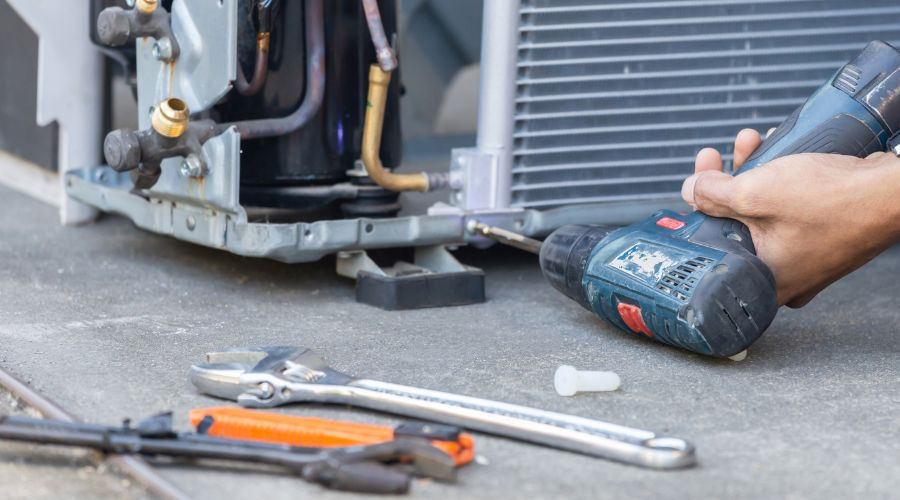

 Unexpectedly high energy bills often signal that an AC system needs professional attention. Many problems can cause inefficiency and higher costs. So, the solution may be repair, maintenance, or replacement, depending on the cause of the air conditioning system’s inefficient operation.
 )

 A
A  Geothermal heat pump systems offer exceptional energy efficiency advantages over conventional heating and air conditioning systems, delivering substantial savings on energy bills for homeowners. Unlike traditional heating systems that generate heat through combustion or electrical resistance, geothermal systems transfer existing heat from the ground. This remarkable efficiency translates to much less energy usage than conventional systems. Additionally, geothermal systems maintain their high efficiency regardless of outdoor temperature extremes, unlike air-source alternatives that may struggle during temperature fluctuations.
)

 When an air conditioner experiences a refrigerant leak, one of the most noticeable signs is diminished cooling performance. Refrigerant is essential to a cooling system, absorbing heat from indoor air and releasing it outside. As refrigerant levels drop due to a leak, the system's heat transfer capacity becomes compromised, which can cause air from the vents to feel warmer than normal. This reduced cooling performance forces the AC system to run longer cycles in an attempt to reach the desired temperature, creating a noticeable difference in comfort throughout a home.
 When refrigerant escapes from the cooling system, it often announces itself through distinctive sounds that shouldn't be ignored. The most common auditory warning is a hissing or whistling noise as pressurized refrigerant forces its way through small cracks or holes in copper lines. This sound is particularly noticeable during operation cycles when pressure differences are greatest.
 )